Adapting API documentation for hybrid B2B discovery journeys requires developer portals to function as dual-purpose platforms. As enterprise evaluators increasingly rely on Large Language Models (LLMs) and AI-assisted search to gather pre-auth information, machine-accessible content is essential. To support this complex evaluation phase, portals must provide machine-legible data while remaining authoritative for human stakeholders.
In our UX maturity and AI visibility assessments of developer portals in the banking and financial services sector, run in January through May in 2026, the Pronovix UX Research Team approached these developer portals as a first-time user.
Why did we do the assessment on the pre-auth journey, why do we insist on spotlighting what is not available without login?
Because users increasingly stay within their own "AI-environments" such as LLMs or custom agentic workflows to gather information.
To understand the nuanced evolution, we focus on the modes of thinking and accountabilities that drive user behavior. The question of who absorbs the consequences if the integration becomes critical infrastructure remains. What is significantly changing though, is how discovery and evaluation happens once AI systems become active intermediaries.
In AI-mediated evaluation environments, inaccessible information increasingly becomes invisible information.
The AI-Mediated Workflow becomes a persistent habit
The most transformative shift is the move toward AI-mediated discovery and evaluation.
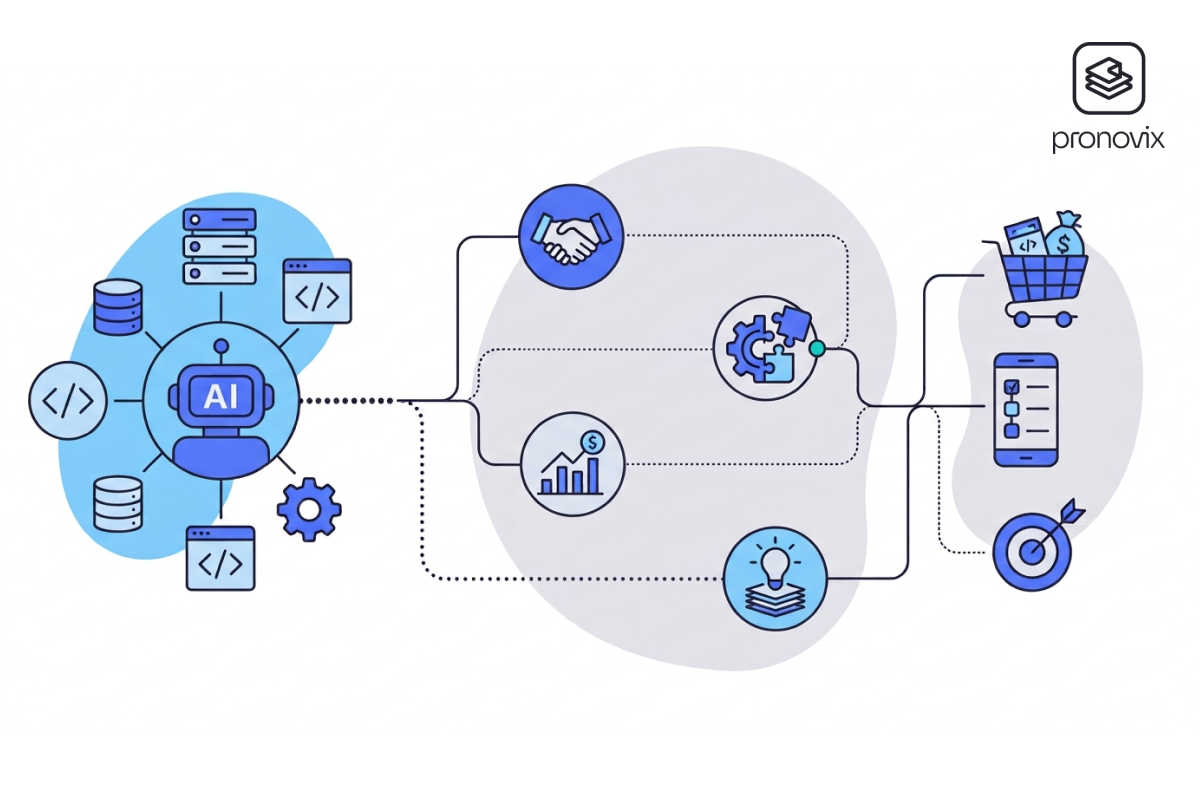
A user sends an AI-mediated query, as general research or directly to your company to find, evaluate and summarize integration options with your business, based on their specific use case.
Let's presume the query found your company's solutions on offer and the capabilities are available for immediate evaluation. In this scenario, the portal must be the trusted and machine-readable rich source of information for AI-mediated evaluation.
Get the latest report from our assessment of developer portals across eleven major banking institutions. This edition focuses specifically on machine accessibility, semantic structure, and AI retrieval readiness.
The human user may only visit the portal UI for the "last mile" tasks, such as getting their API keys.
Once users benefit from hybrid workflows, these workflows can quickly become persistent habits. Their AI-augmented customized work environment becomes a permanent mediator, filtering and translating content into the user's preferred professional context.
AI-assisted evaluation is situational
To be realistic, the use of AI is situational and unpredictable. Some retrieval patterns are already observable through search, AI, and social platforms, and many user intents can still be grouped into familiar categories such as informational, commercial, or transactional queries. We can identify patterns, but we cannot safely assume a single dominant discovery workflow anymore.
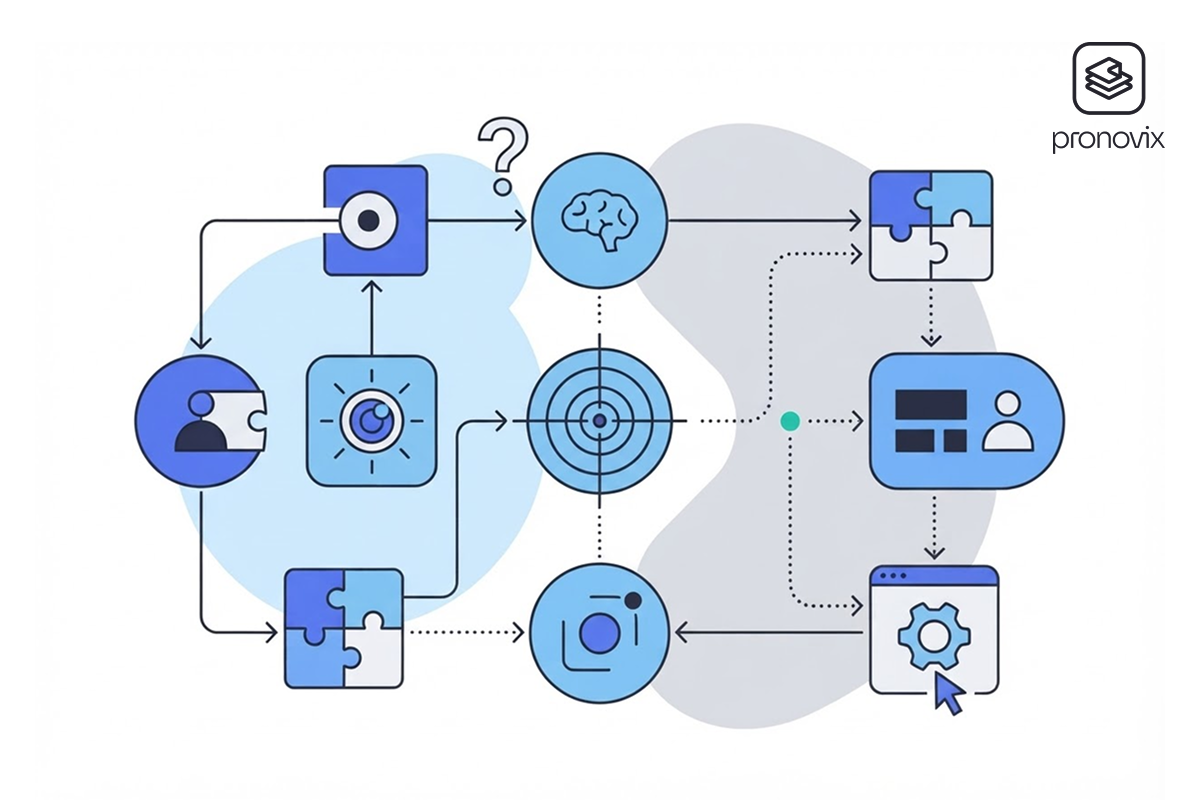
Users may encounter integration information through traditional search, AI summaries, enterprise copilots, custom agents, embedded retrieval systems, shared snippets, or direct interactions with the portal UI itself. Increasingly, discovery happens through a hybrid combination of these pathways rather than through a single linear journey.
For developer portals, this means designing for a broad spectrum of discovery behaviors and retrieval contexts. Portal content should be accessible, machine-legible, context-resilient, and authoritative across a wide variety of human and AI-mediated discovery workflows.
Fluid evaluation, stable accountability
The developer portal domain acts as both a product marketplace and a technical workbench. Herein, the evaluation lenses are fluid.
Evaluators increasingly explore outside their original specialization; and AI tooling available to them compresses the cost of switching between these various evaluation lenses.
Meanwhile, institutional accountability remains comparatively stable. Traditionally, we distinguish between two primary poles of evaluation:
- Commercial evaluation concerns commercial viability, governance, and partnership trust.
- Technical evaluation concerns implementation feasibility, security posture, and architectural fit.
One recurring failure pattern occurs when there is a mismatch between the content provided and the accountability of the visitor. For example, when a portal provides comprehensive API documentation but hides pricing information behind a "Contact Sales" button. This creates a bottleneck, the evaluation stalls because the user cannot immediately check against all the "pre-clearance" requirements.
Our recent research evaluates the maturity of developer portals within the traditional banking sector, focusing on the critical pre-login discovery and evaluation stages of the user journey.
The report examines how effectively 19 major financial institutions present their solutions to the hybrid user, demonstrating that human cognitive friction directly blocks AI visibility.
The Augmented Specialist and Enterprise Governance
AI reduces cross-dependency during discovery, but not during organizational commitment.
We are seeing two distinct trends in how this manifests in professional roles:
- Augmented Specialists: These individuals use AI to achieve greater autonomy, often performing tasks previously outside their scope (for example a business user tests a code sample). While their role expands fast, their core domain of knowledge shifts slower. They use AI to bridge gaps in tactical knowledge without necessarily becoming for example engineers themselves.
- Architects / Senior Leads: At the enterprise level, senior engineers often operate at the intersection of business and technology, they are often responsible for defining and guiding integration decisions. While they are in theory capable of fulfilling many roles, in mature enterprises with strict architectural governance, responsibilities are intentionally separated to manage risk and scale complexity. Ownership is spread across governance structures, architectural boards, and legal/finance departments.
In smaller contexts however, at team or domain level, there is higher autonomy and thus the situational occurrence of role consolidations. Perspectives of the various traditional roles differ, but there are new trade-offs and overlaps that are now possible within an AI-assisted workflow.
Whether this represents efficiency or organizational compromise remains open to interpretation. What matters for our purposes is that hybrid workflows increase dependency on portal maturity.
Build for dual purpose: machine legible and authoritative source of truth
While AI allows for an overlap in capabilities, the consequences of decisions remain separate. The business side still owns the investment rationale; the technical side still owns the integration burden and the security risks.
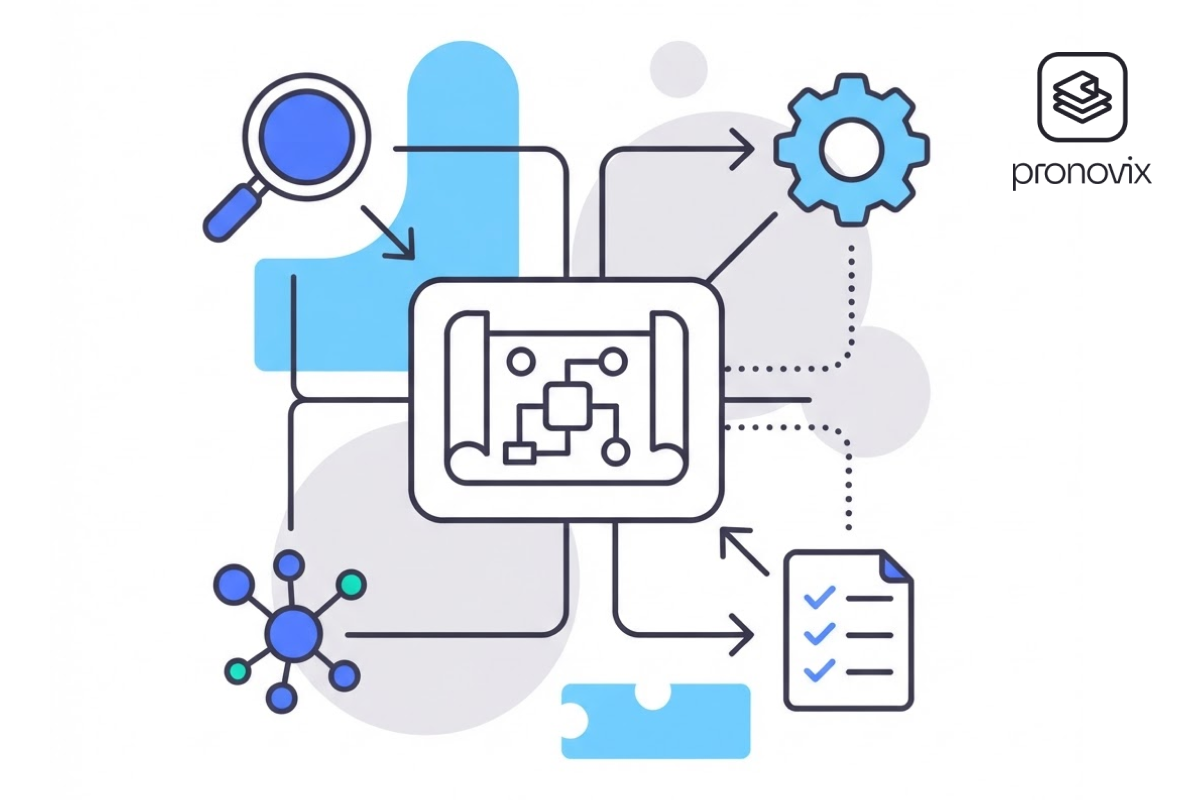
A modern developer portal must be dual-purpose: it must be machine-legible for the AI agents performing the discovery, while remaining authoritative and clear for the human stakeholders who hold the final accountability.